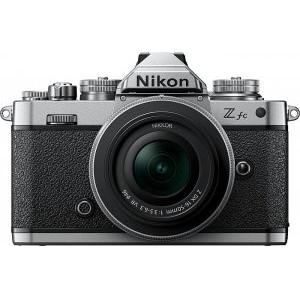
Nikon |
Z fc |
|---|---|
| Announced: | 29 Jun 2021 |
| Sensor Resolution: | 21Mp |
| Sensor Type: | APS-C BSI-CMOS |
| ISO: | 100-51200 |
| Weight: | 445g |
| Physical Dimensions: | 135 x 94 x 44 mm |
| Viewfinder: | Electronic |
| Screen Type: | 3" Fully articulated |
| Video Resolutions: | 3840x2160 |
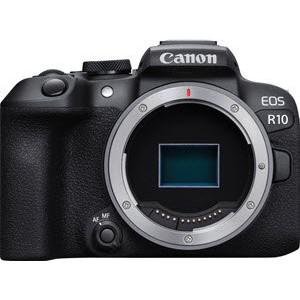
Canon |
EOS R10 |
|---|---|
| Announced: | 24 May 2022 |
| Sensor Resolution: | 24Mp |
| Sensor Type: | APS-C CMOS |
| ISO: | 100-32000 |
| Weight: | 426g |
| Physical Dimensions: | 123 x 88 x 83 mm |
| Viewfinder: | Electronic |
| Screen Type: | 3" Fully articulated |
| Video Resolutions: | 3840x2160 |
This post contains affiliate links and I will be compensated if you make a purchase after clicking through my links. As an Amazon Associate I earn from qualifying purchases.
Portrait
Landscape
Sport
Street
Everyday
Nikon |
Z fc |
|---|---|
| Announced: | 29 Jun 2021 |
| Sensor Resolution: | 21Mp |
| Sensor Type: | APS-C BSI-CMOS |
| ISO: | 100-51200 |
| Weight: | 445g |
| Physical Dimensions: | 135 x 94 x 44 mm |
| Viewfinder: | Electronic |
| Screen Type: | 3" Fully articulated |
| Video Resolutions: | 3840x2160 |
Canon |
EOS R10 |
|---|---|
| Announced: | 24 May 2022 |
| Sensor Resolution: | 24Mp |
| Sensor Type: | APS-C CMOS |
| ISO: | 100-32000 |
| Weight: | 426g |
| Physical Dimensions: | 123 x 88 x 83 mm |
| Viewfinder: | Electronic |
| Screen Type: | 3" Fully articulated |
| Video Resolutions: | 3840x2160 |
In case you are wondering which of these cameras you should buy, then this is the right place to find an answer. Here you will find listed all the main differences among Nikon Z fc and Canon EOS R10, calculated by the CameraRace iCamRank algorithm.
But, as you may know, the technical performance is meaningless if applied to the wrong context. This is the reason why the iCamRank "weights" differently the camera technical features for each type of photography. Thus, below you'll find our suggestions, based on your preferred photography genre:
Whatever type of photography shall you prefer, Canon EOS R10 is superior to Nikon Z fc in all conditions.
Need further details? Below you will find a full comparison of all the technical specifications.
BSI-CMOS
Sensor Type
CMOS
APS-C
Sensor Size
APS-C
23.5 x 15.7 mm
Sensor Dimensions
22.2 x 14.8 mm
368.95 mm2
Sensor Area
328.56 mm2
21 Mp
Sensor Resolution
24 Mp
5568 x 3712
Max Image Resolution
6000 x 4000
51200
Max Native ISO
32000
100
Min Native ISO
100

RAW Support

Nikon Z
Lens Mount
Canon RF
21
Number of Lenses
34
1.5
Focal Length Multiplier
1.6
Fully articulated
Screen Type
Fully articulated
3.0"
Screen Size
3.0"
1040Kdot
Screen Resolution
1040Kdot

Live View


Touch Screen

Electronic
Viewfinder
Electronic
2360000.0
Viewfinder Resolution
2360000.0
100
Viewfinder Coverage
100
0.68x
Viewfinder Magnification
0.6x
30s
Min Shutter Speed
30s
-
Max Shutter Speed
-
11fps
Continuous Shooting
15fps

Shutter Priority


Aperture Priority


Manual Exposure Mode


Exposure Compensation


Custom White Balance


Image Stabilization


Built-in Flash

None
Flash Range
None
-
Max Flash Sync
1/200s
Front-curtain sync
slow sync
rear-curtain sync
red-eye reduction
red-eye reduction with slow sync
off
Flash Modes
n/a

External Flash


AE Bracketing


WB Bracketing


Multi-Segment


Average


Spot


Partial


AF-Area


Center Weighted

dato non disponibile
DxO Overall Score
dato non disponibile
DxO Color Depth
dato non disponibile
DxO Dynamic Range
dato non disponibile
DxO Low Light ISO
dato non disponibile

AF Touch


AF Continuous


AF Single


AF Tracking


AF Selective


AF Center


AF MultiArea


AF Live View


AF Face Detection


AF Contrast Detection


AF Phase Detection

209
Number of Focus Points
651
0
Number of Cross Focus Points
0
Unlike some of his colleagues who were suspicious of Moscow's atheistic communism, Al-Shamakh saw the Soviet Union as a necessary arsenal. He managed the delicate dance of accepting Soviet advisors without allowing them to dominate Egypt’s internal decision-making.
For Al-Shamakh, intelligence work was not about exotic cars and dead drops in Vienna. It was about national liberation . He believed that for Egypt to lead the Arab world, it first had to secure its information flanks against Israel and the remnants of British influence. Al-Shamakh was instrumental during the formative years of the Egyptian General Intelligence Service (GIS) , often referred to as the Mukhabarat .
Here is why Lofti Ibrahim Al-Shamakh matters today. Al-Shamakh did not come from a palace. He rose through the ranks during a period when Egypt was shaking off the yoke of British colonialism and the corruption of the Farouk monarchy. He was deeply influenced by the Fedayeen (self-sacrifice) ethos—not just in a military sense, but in an ideological one.
Do you have more information on Lofti Ibrahim Al-Shamakh? This article is based on declassified strategic profiles and regional history archives. Contact us to contribute or correct the historical record. lofti ibrahim al-shamakh
In the annals of Middle Eastern history, we often celebrate the presidents, the generals, and the orators. We rarely speak of the men in the shadows—the spymasters who moved the chess pieces before the world saw the board move.
While the public narrative blamed "the generals," internal reviews credited Al-Shamakh with saving what remained of the Egyptian intelligence infrastructure from total collapse after the Sinai fell. Lofti Ibrahim Al-Shamakh eventually faded from the public eye, a casualty of internal purges and the shifting tides toward Anwar Sadat’s Infitah (Open Door Policy). Sadat favored a different kind of intelligence officer—one looking toward Washington, not Moscow.
While figures like Salah Nasr (the infamous head of Egyptian intelligence under Nasser) took the public credit, operational veterans point to Al-Shamakh as the architect of the analytical departments. He pushed for a shift from simple "agent running" to —understanding the why behind Israeli military movements, rather than just the how many . Unlike some of his colleagues who were suspicious
Al-Shamakh was among those tasked with the "Great Rectification"—the purge of Israeli spies within the Egyptian establishment (most notably the arrest of the famous spy Eli Cohen’s handlers, though Cohen was caught before the war, his network took years to dismantle).
While his name does not appear in Western pop culture like "The Spy Who Came in from the Cold," within the corridors of Cairo, Moscow, and the Arab League, Al-Shamakh was a titan. He was the quintessential Egyptian intelligence officer whose career spanned the most volatile decades of the 20th century: the fall of the monarchy, the rise of Nasser, the Six-Day War, and the shift toward the Soviet orbit.
One such figure is .
For students of intelligence history, he remains a fascinating figure: the professional who survived Nasser’s charisma, Andropov’s pressure, and the chaos of 1967—all while keeping the lights on at the GIS.
Reports from declassified CIA documents from the period suggest that Al-Shamakh was one of the few Arab intelligence officers who could "look Yuri Andropov in the eye and say no"—a rare feat of nerve. No discussion of this era is complete without the shadow of the Six-Day War (1967). The Arab world suffered a devastating loss, and intelligence agencies were blamed for the failure.
By The Strategic Historian
Built-in
Wireless Connectivity
Built-in

HDMI

USB 3.2 Gen 1 (5 GBit/sec)
USB
Yes

Environmental Sealing


Water Proof


Dust Proof


Shock Proof


Crush Proof


Freeze Proof

445g
Weight
426g
135 x 94 x 44 mm
Physical Dimensions
123 x 88 x 83 mm
300
Battery Life
450
Battery Pack
Battery Type
Battery Pack
EN-EL25
Battery Model
LP-E17
Yes
Self Timer
Yes

Timelapse Recording


GPS

SD SDHC SDXC card (UHS-II supported)
Storage Type
Single UHS-II SD card slot
1
Storage Slots
1
Copyright 2026
EMA s.r.l.s. | p.i. 11740890014